The steps Julien Jimenez took to launch an online clothing brand
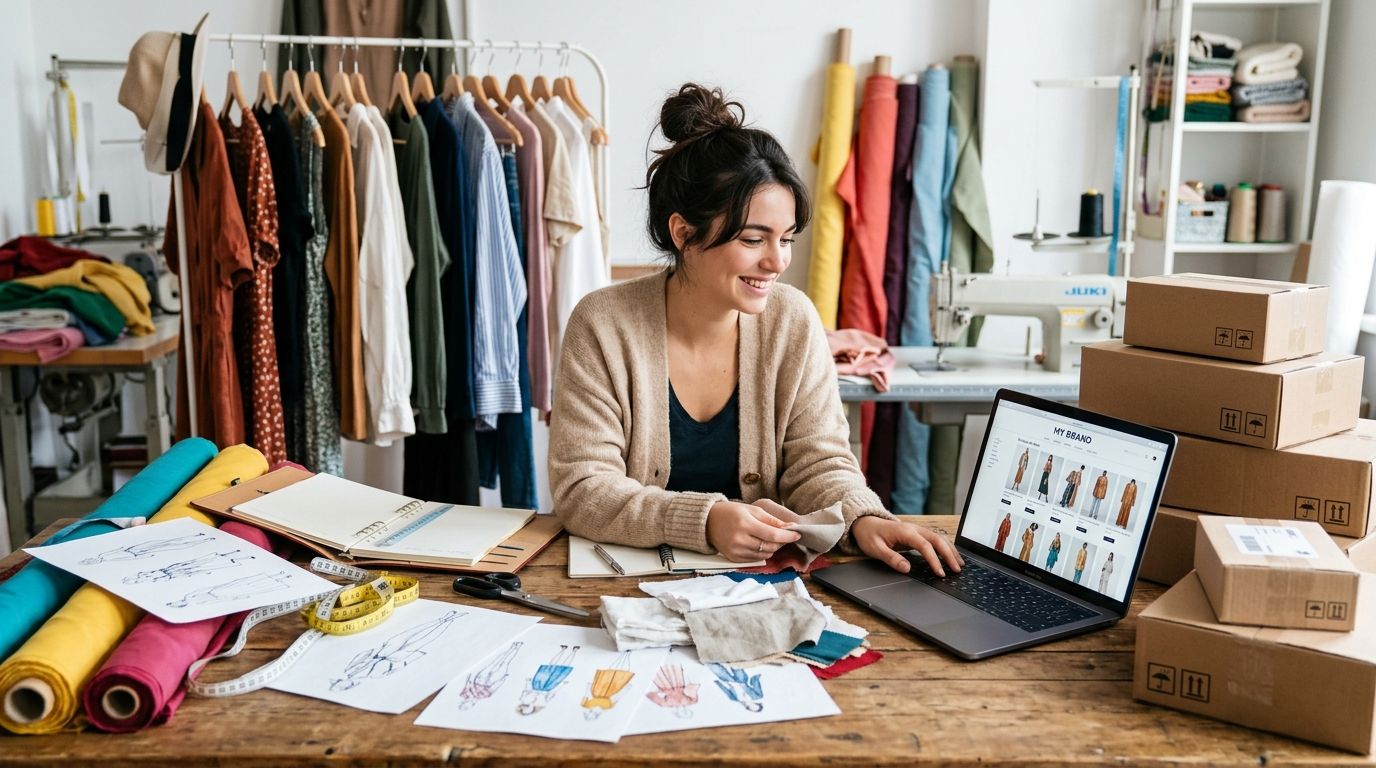
Creating an online clothing brand is attracting a growing number of designers, amateur stylists, and fashion-loving entrepreneurs. The accessibility of digital tools, the democratization of on-demand manufacturing, and the rise of independent boutiques have paved the way for projects that wouldn’t have existed ten years ago. But between the initial idea and the first sale, the path is paved with concrete steps that are best anticipated.
This guide doesn’t promise quick success or a magic bullet. It offers a realistic, step-by-step path to laying the solid foundations of a viable online fashion brand — whether it’s clothing, accessories, hats, or pieces with a strong identity.
Define your target audience and positioning first and foremost
Launching a clothing brand without defining its target audience risks appealing to everyone without convincing anyone. Positioning is the backbone of the project.
Who is the brand aimed at? A collection of bohemian dresses for women aged 25 to 40 doesn’t follow the same logic as a unisex streetwear line for urban high school students. The target audience determines the style, the materials, the prices, the communication channels, and even the tone used on the website.
What makes the brand different? This identifiable positioning can be due to a material (natural linen, upcycling), a precise aesthetic (cottagecore, Scandinavian minimalism), an ethical commitment or a very specific niche (accessories for stage hats, costumes for historical reenactment enthusiasts).
Once the target market is defined, it is useful to analyze direct competitors: what prices do they charge? What is their online presence? Which products perform best according to customer reviews? This information guides choices without requiring costly market research.
Create the name and visual identity
The brand name should be memorable, available as a domain name, and ideally, registerable with the INPI (French National Institute of Industrial Property) to protect intellectual property. Avoid names that are too generic or too similar to an existing trademark.
Visual identity encompasses the logo, color palette, typography, and photographic style. These elements must form a cohesive whole, from packaging to the online store. A freelance graphic designer or tools like Canva Pro can help build this identity without a large budget, provided consistency is maintained from the outset.
Choosing your manufacturing method
This is often the stage that raises the most questions. Creators have three main options:
- Custom manufacturing via a French or European textile manufacturer: more expensive per unit, it guarantees better quality control and ethical production that can be valued by customers.
- Customizing existing parts (embroidery, printing, dyeing): an intermediate, flexible and accessible solution for testing designs.
- Print on demand (print-on-demand): ideal for starting without stock, with suppliers like Printful or Printify who produce on a per-order basis.
Regardless of the option chosen, ordering samples before any launch is essential. The quality perceived on screen and the quality received in the customer’s hands are two very different things.
Calculate the budget and the selling price
THE budget clothing brand This varies considerably depending on the manufacturing method, the size of the first collection, and marketing investments. Here are the main areas to anticipate:
| Expenditure item | Indicative range |
|---|---|
| Samples and prototypes | €100 – €800 |
| First order (minimum stock) | €500 – €3,000 |
| Visual identity (logo, brand guidelines) | €200 – €1,500 |
| Creation of the online store | €0 – €1,000 |
| Product photo shoot | €200 – €1,000 |
| Communication / advertising launch | €100 – €500 |
| Legal notices and terms and conditions (legal) | €150 – €400 |
The selling price is calculated based on the total cost price (manufacturing + packaging + shipping costs + fixed costs). A markup factor of between 2.5 and 4 is commonly applied in the fashion industry to cover expenses and generate a viable profit margin.
Building the first collection
A limited initial collection is preferable to an extensive range. Ten to twenty well-chosen items are better than fifty poorly executed pieces. This reduces financial risk, simplifies inventory management, and allows you to test customers’ actual preferences.
A few technical points to address:
- Sizes : Providing a clear measurement chart reduces returns and reassures hesitant buyers.
- The materials Indicating the exact composition is a legal requirement in France. 100% cotton, linen, recycled polyester — transparency is expected.
- The colors : limit the initial variations (two or three colors per model) to keep stocks manageable.
Take photos and write product descriptions
Each product description must include:
- A precise description (cut, material, care instructions)
- The size chart with the actual garment measurements
- Textile composition (required)
- The images worn and laid flat
Create the online store and structure the digital presence
Shopify, WooCommerce (on WordPress) and Squarespace are the most used solutions for create a fashion boutique online. The choice depends on the budget, technical skills and desired features (customization options, integration of returns management, etc.).
Digital presence isn’t limited to a website. A clear domain name, a professional email address, and social media pages consistent with the brand identity create a credible package in the eyes of potential customers. For creators who also want to strengthen their local visibility or develop a consulting business around their brand, experts like julien-jimenez.com accompany the structuring of this online presence with a concrete approach.
Managing deliveries, returns and customer service
Selling your clothes online This implies clearly defining one’s logistics policy before opening:
- Delivery times were as promised and respected.
- Selected carriers (Colissimo, Mondial Relay, DHL depending on volumes)
- Return policy compliant with the 14-day right of withdrawal (mandatory in France for distance selling)
- A reachable customer service, even a minimal one — a dedicated email address is enough to start with
Transparency on these points reduces disputes and builds trust from the very first orders.
Comply with legal obligations
Before any sale can take place, several legal requirements must be met:
- Legal notice Name of the organization, address, contact person, SIRET number
- General Terms and Conditions of Sale (GTC) refunds, deadlines, responsibilities
- Privacy Policy (GDPR) if you collect customer data
- Product composition : mandatory on each textile product sheet
- Right of withdrawal 14 days for all online purchases
A lawyer or a service like Captain Contrat can generate these compliant documents without starting from scratch.
Prepare for the launch and communicate in advance
Pre-opening communication generates an audience even before the first sale. A few weeks of teasing on Instagram or TikTok—showing behind-the-scenes glimpses of the manufacturing process, material choices, and initial photos—create anticipation and facilitate the first orders.
A launch in “waiting list” mode or with an exclusive offer for the first customers reinforces this effect without excessive promises.
Checklist before opening the shop
- Positioning and target clearly defined
- Available and registered brand name
- Complete visual identity (logo, colours, typography)
- Selected manufacturer or supplier, validated samples
- Cost price and selling price calculated
- First collection photographed with complete product descriptions
- Size chart available on the website
- Online store tested on mobile and desktop
- Legal notices, terms and conditions and return policy published
- Delivery policy defined and displayed
- Active social media presence with pre-launch posts
- Operational professional email
Build on solid foundations, not on promises.
Create your own fashion brand It requires time, discipline, and a certain tolerance for uncertainty. The first few weeks don’t always go as planned. Products that seemed like obvious choices don’t always sell, and those that were initially overlooked sometimes become bestsellers.
What distinguishes projects that stand the test of time is the ability to test, adjust, and listen to customer feedback without getting discouraged. Launching a small collection, observing what works, and then refining—that’s a more robust cycle than betting everything on a perfect launch.
FAQ — Frequently asked questions about creating an online clothing brand
What budget should be planned to launch an online clothing brand?
A basic print-on-demand launch can start with €500 to €1,500 (website, visuals, marketing). A brand with its own inventory and textile manufacturer typically requires between €3,000 and €8,000 for a substantial first collection. Clothing brand budgets vary depending on the production method, the size of the collection, and marketing ambitions.
Do you need to create a company to sell clothes online?
Not necessarily at the start. A micro-enterprise is the most accessible status for testing an online sales activity. It simplifies administrative procedures and is well-suited to an initial limited collection. Beyond a certain turnover, other structures (SASU, EURL) become more appropriate.
How to find a textile manufacturer for a small brand?
Directories like Texintel (France) or platforms like Alibaba (international) can help identify manufacturers. For French or European production, trade shows like Première Vision in Paris are useful entry points. In all cases, order samples before confirming a partnership.
Is print-on-demand a good option for starting out?
Yes, it’s a good way to test designs without the risk of inventory. Margins are lower than with in-house production, but the model eliminates unsold stock. It’s a good entry point for validating an audience before investing in more controlled manufacturing.
How to set the selling price of your clothes?
The selling price is calculated based on the total cost price (manufacturing, packaging, shipping, and a share of fixed costs). A markup of 2.5 to 4 is generally applied. The perceived positioning must also be considered: a premium brand cannot offer entry-level prices without damaging its image.